Article Plan: Open and Closed Syllables Worksheets PDF
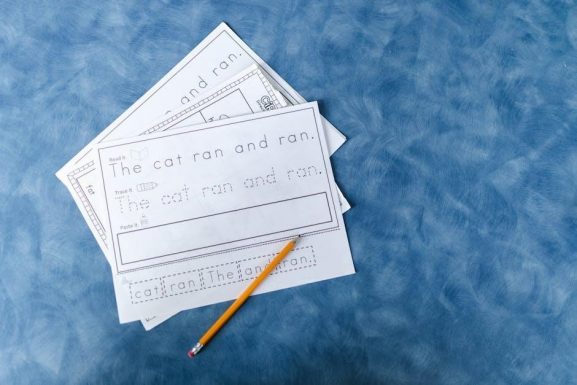
This article details a plan for understanding and teaching open and closed syllables, utilizing worksheets in PDF format. It covers syllable identification, segmentation, and building,
plus resources for finding and creating effective learning materials.
Syllables are the building blocks of spoken language, and understanding them is crucial for reading and spelling proficiency. A syllable is a unit of pronunciation having one vowel sound, with or without surrounding consonants, forming a word or part of a word. Recognizing syllable patterns, particularly the distinction between open and closed syllables, significantly aids in decoding unfamiliar words.
This understanding forms the foundation for phonetic awareness and fluency. Mastering syllables allows students to break down complex words into manageable parts, improving both reading comprehension and spelling accuracy. The focus on open and closed syllables is particularly important because these patterns dictate vowel sounds – a key element in pronunciation.
Worksheets designed to practice identifying and manipulating these syllable types provide targeted practice. These resources often incorporate activities like syllable chopping, word building, and segmentation exercises. Effective instruction involves not only recognizing the patterns but also understanding why these patterns exist and how they influence vowel pronunciation. This foundational knowledge is essential for developing strong literacy skills.
What are Open Syllables?
Open syllables are a fundamental concept in phonics, representing a specific syllable structure that impacts vowel pronunciation. An open syllable ends with a single vowel sound – it’s “open” because the vowel isn’t blocked by a consonant. This openness typically results in a long vowel sound, meaning the vowel “says its name.”

Consider the word “be.” The syllable “be” ends with the vowel ‘e’, and the ‘e’ makes its long sound. This is a classic example of an open syllable. Similarly, in the word “go,” the ‘o’ is not followed by a consonant, creating an open syllable and a long ‘o’ sound. Recognizing this pattern is key to decoding words efficiently.
Worksheets focusing on open syllables often present words where students must identify the open syllable and articulate the long vowel sound. Activities might involve circling the vowel in an open syllable or reading lists of words and categorizing them based on whether they contain open syllables. Understanding this structure is a crucial step towards fluent reading and accurate spelling, particularly when encountering unfamiliar words.
Characteristics of Open Syllables
Open syllables possess distinct characteristics that differentiate them from other syllable types. The most defining feature is their ending: they conclude with a single vowel sound. This lack of a consonant closure is what gives them the “open” designation and influences vowel pronunciation.
Because of this open structure, vowels within open syllables generally produce their long sound. Think of words like “he,” “me,” “so,” and “ti.” The vowels in these words are not blocked by a following consonant, allowing them to resonate with their full, long sound. This is a consistent pattern, though exceptions can occur in more complex words.
Worksheets designed to reinforce understanding of open syllable characteristics often focus on identifying this vowel-ending pattern. Activities may include sorting words into categories based on whether they end in a vowel, highlighting the vowel in open syllables, or completing sentences with words containing open syllables. Recognizing these characteristics is vital for decoding and encoding words effectively, building a strong foundation in phonics.
Examples of Open Syllable Words
Illustrating open syllables with concrete examples is crucial for comprehension. Many common, everyday words feature this syllable type, making it relatable for learners; Single-syllable words like “go,” “be,” “no,” and “she” are prime examples, clearly demonstrating the vowel-ending pattern.
However, open syllables frequently appear within multi-syllable words. Consider “table” (ta-ble), “hotel” (ho-tel), or “silent” (si-lent). In each case, the first syllable is open, ending with a long vowel sound. Identifying these within larger words is a key skill developed through targeted practice.
Worksheets often present lists of words, asking students to circle or highlight the open syllables. Another common activity involves dividing words into syllables and labeling those ending in a vowel as “open.” Furthermore, exercises might require students to generate their own examples of open syllable words, solidifying their understanding. Recognizing these patterns builds fluency and decoding skills, essential for proficient reading and spelling.
Vowel Sounds in Open Syllables
A defining characteristic of open syllables is the long vowel sound they typically produce. Because the vowel isn’t “closed in” by a consonant, it has the freedom to articulate its long sound – saying its name, essentially. This is a fundamental concept for students to grasp when working with syllable types.
For instance, in the word “he,” the ‘e’ makes the long ‘e’ sound. Similarly, “go” features the long ‘o’ sound, and “me” showcases the long ‘e’ sound. Worksheets frequently focus on differentiating these long vowel sounds from their short counterparts found in closed syllables.
Activities often involve phonetic transcription practice, where students learn to represent these vowel sounds using symbols. Matching exercises pairing open syllables with their corresponding long vowel sounds are also common. Understanding that the open structure allows for the long vowel sound is key. Some resources emphasize “feeling” the open volume of the throat during vowel formation, promoting kinesthetic learning. Mastering this connection between syllable structure and vowel pronunciation is vital for decoding and encoding words effectively.
What are Closed Syllables?

Closed syllables are the most common syllable type in the English language, and understanding them is crucial for building reading and spelling skills. A closed syllable is one that ends in a consonant sound. This consonant “closes in” the vowel, impacting its pronunciation.

Essentially, a closed syllable contains a vowel followed by one or more consonant letters. This structure typically results in a short vowel sound – a sound that doesn’t say its name. Think of words like “cat,” “dog,” and “sun.” The vowels in these words all produce short sounds.
Worksheets designed to teach closed syllables often emphasize this consonant-vowel-consonant (CVC) pattern. Identifying the final consonant and relating it to the short vowel sound is a key skill. Activities may include sorting words into closed and open syllable categories, or building words by adding consonants to vowel sounds. Recognizing closed syllables is foundational for decoding unfamiliar words and improving reading fluency. The concept is often introduced alongside open syllables to highlight the contrasting vowel sounds.
Characteristics of Closed Syllables
Several key characteristics define closed syllables, making them relatively straightforward to identify. The most defining feature is the presence of a consonant sound at the end of the syllable. This consonant effectively “closes” the vowel sound, influencing its pronunciation.

Consequently, closed syllables almost always feature a short vowel sound. This means the vowel produces a brief, clipped sound, rather than its long vowel “name.” For example, in the word “ship,” the ‘i’ makes a short ‘i’ sound. Another characteristic is the common CVC (consonant-vowel-consonant) structure, though closed syllables can be longer, containing consonant blends or digraphs.
Worksheets focusing on these characteristics often present exercises where students underline the final consonant, identify the short vowel sound, or categorize words based on these features. Understanding these characteristics is vital for syllable division, as closed syllables are divided between consonants. Recognizing these patterns empowers students to decode words independently and build a strong phonetic foundation.
Examples of Closed Syllable Words
Numerous common words exemplify the closed syllable structure, providing ample practice for learners. Simple, three-letter words like “cat,” “dog,” “sun,” and “bed” are excellent starting points, clearly demonstrating the consonant-vowel-consonant pattern and short vowel sounds.
Moving beyond CVC words, examples like “rabbit,” “pencil,” “basket,” and “problem” illustrate how closed syllables can incorporate blends and digraphs while still maintaining their defining characteristics. The final consonant continues to “close” the vowel, resulting in a short vowel sound. Even multisyllabic words often contain closed syllables; for instance, in “fantastic,” the syllable “fan” is closed.
Worksheets frequently utilize lists of words, asking students to identify which are closed syllables, or to highlight the closed syllables within longer words. Activities might also involve sorting words into categories – closed vs. open – or building new words using closed syllable patterns. Exposure to a wide range of examples solidifies understanding and promotes fluent reading.
Vowel Sounds in Closed Syllables
The defining characteristic of vowel sounds within closed syllables is their brevity. Typically, closed syllables feature short vowel sounds, representing the most common pronunciation of vowels for beginning readers. This contrasts sharply with the long vowel sounds found in open syllables.
Specifically, the vowel sounds in closed syllables are: short ‘a’ as in “cat,” short ‘e’ as in “bed,” short ‘i’ as in “pig,” short ‘o’ as in “dog,” and short ‘u’ as in “sun.” These sounds are often the first vowel sounds children master, forming the foundation for decoding skills.
Worksheets focusing on vowel sounds in closed syllables often include activities like identifying the short vowel sound in a given word, filling in missing vowels to complete CVC words, or sorting pictures based on their short vowel sound. Phonetic transcriptions, as seen in Romanian vowel studies, can further clarify pronunciation. Understanding this consistent short vowel sound is crucial for accurate reading and spelling.
Key Differences: Open vs. Closed Syllables
The fundamental distinction between open and closed syllables lies in their structure and resulting vowel sounds. Closed syllables conclude with one or more consonant sounds, resulting in short vowel pronunciations – think “cat,” “dog,” or “sun.” Conversely, open syllables terminate with a single vowel sound, typically producing a long vowel sound, as in “he,” “go,” or “me.”
Another key difference is syllable division. Closed syllables are divided between consonants (e.g., “but-ter”), while open syllables are divided after the vowel or following consonant. This impacts how we break down words for decoding. Recognizing these patterns is vital for effective reading.
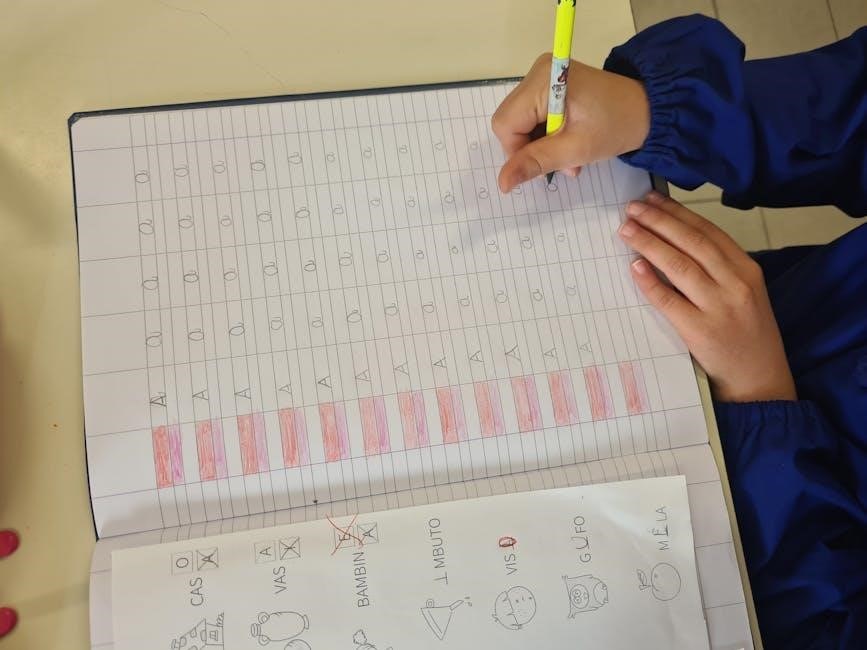
Worksheets often highlight this contrast through comparative exercises. Students might sort words into open or closed syllable categories, identify the syllable type within a word, or practice dividing words correctly. Understanding these differences is foundational for mastering syllable patterns and improving reading fluency, as emphasized in syllable chopping activities.
Syllable Division Rules
Accurate syllable division is crucial for both reading and spelling, and specific rules govern how to break down words containing open and closed syllables. A primary rule dictates dividing closed syllables between consonant sounds – for example, “nap-kin” or “bas-ket.” This helps students visually and phonetically separate the sounds.
Conversely, open syllables are generally divided after the vowel sound. If a single consonant follows the vowel, it usually remains with the open syllable (e.g., “go-ing”). However, rules become more complex with vowel teams or multiple consonants. Worksheets frequently focus on applying these rules through practice exercises.
It’s important to note exceptions exist, and consistent practice is key. Students benefit from activities that require them to pronounce words, identify syllable types, and then physically divide the words on paper. Mastering these rules, alongside understanding vowel sounds, significantly improves decoding skills and spelling accuracy, as highlighted in syllabification tips.
Dividing Words with Open and Closed Syllables
Successfully dividing words containing both open and closed syllables requires applying previously learned rules and recognizing patterns. Many worksheets present words like “sun-shine,” where “sun” is a closed syllable (short vowel, ending consonant) and “shine” is open (long vowel sound, ending in a vowel).
Students often encounter challenges with words containing multiple syllables and varying combinations. For instance, “in-for-ma-tion” demonstrates a sequence of closed, open, and closed syllables. Worksheets often provide guided practice, starting with simpler examples and gradually increasing complexity.
Effective exercises involve marking vowel sounds (long or short), identifying syllable types, and then drawing lines to divide the words correctly. Pronouncing each syllable individually aids in accurate division. Romanian phonetic transcriptions, as found in some resources, can further enhance understanding of vowel sounds. Consistent practice with diverse word examples, utilizing PDF worksheets, builds confidence and fluency in syllable division.
Importance of Understanding Syllable Types
Grasping the distinction between open and closed syllables is foundational for decoding and encoding words effectively. Recognizing these patterns unlocks a deeper understanding of vowel sounds – a crucial skill for reading fluency and accurate spelling. Worksheets focusing on open and closed syllables provide targeted practice in identifying these core building blocks of language.
Understanding syllable types isn’t merely about memorization; it’s about applying phonetic principles. Knowing a syllable is ‘closed’ signals a short vowel sound, while an ‘open’ syllable typically indicates a long vowel. This knowledge empowers students to predict pronunciation and tackle unfamiliar words with greater confidence.
Furthermore, this understanding directly supports syllable division, a skill vital for reading multi-syllabic words. Activities like “Syllable Chopping” – visually separating syllables – reinforce this concept. Competent vowel formation, achieved through understanding open syllable vocalization, also contributes to clear speech. Ultimately, mastering these concepts, aided by PDF worksheets, builds a strong literacy foundation.
Benefits of Using Worksheets
Worksheets dedicated to open and closed syllables offer a structured and engaging approach to mastering these phonetic concepts; They provide focused practice, allowing students to solidify their understanding through repetition and application; The PDF format ensures accessibility and ease of distribution, making them ideal for classroom use or home learning.
These resources move beyond rote memorization, encouraging active learning. Activities like identifying syllable types, segmenting words, and building new words with open and closed syllables promote critical thinking and phonetic awareness. This hands-on approach caters to diverse learning styles, reinforcing concepts in a tangible way.
Moreover, worksheets facilitate independent practice and assessment. Teachers can easily monitor student progress and identify areas needing further support. The availability of free worksheets online expands access to quality learning materials. Utilizing these tools, alongside understanding vowel sounds and syllable division rules, significantly boosts reading and spelling skills.
Types of Open and Closed Syllable Worksheets
A variety of worksheets cater to different learning needs when focusing on open and closed syllables. Identification worksheets present lists of words, requiring students to label each syllable as open or closed – a foundational skill. Segmentation worksheets challenge learners to divide words into their constituent syllables, reinforcing syllable division rules.
Word building worksheets encourage students to create words using open and closed syllable components, promoting phonetic awareness and spelling proficiency. Some worksheets incorporate visual aids, like “syllable chopping” activities, using illustrations to represent syllable separation. Others focus on vowel sounds, prompting students to identify long or short vowel sounds within each syllable type.
More advanced worksheets may include dictation exercises, where students write words based on spoken syllables, or sentence completion tasks utilizing open and closed syllable words. Romanian phonetic transcriptions can even be incorporated for comparative analysis. These diverse formats ensure comprehensive practice and cater to varied learning preferences, ultimately strengthening reading and decoding skills.
Worksheet Activities: Identifying Syllable Types
Worksheets focused on identifying syllable types are crucial for building a strong phonics foundation. A common activity involves presenting students with word lists and asking them to circle or highlight the open syllables and underline the closed syllables. Variations include color-coding – assigning a specific color to each syllable type for visual reinforcement.
Another effective exercise requires students to categorize words based on their syllable structure. Worksheets might provide columns labeled “Open Syllables” and “Closed Syllables,” prompting students to sort words accordingly. Multiple-choice questions testing understanding of syllable definitions are also frequently used.
More challenging worksheets present sentences where students must identify all open and closed syllables, not just within individual words. Some incorporate minimal pairs – words differing by only one syllable type – to highlight the impact of syllable structure on vowel sound. These activities build automaticity in recognizing open and closed syllables, improving decoding skills and reading fluency.
Worksheet Activities: Syllable Segmentation
Syllable segmentation worksheets help students break down words into their individual syllable components, focusing specifically on open and closed structures. A popular activity involves providing words and asking students to draw lines between syllables – visually separating the open from the closed. This reinforces the concept of syllable division.
Another common exercise presents words with missing syllable breaks. Students must insert slashes (/) to correctly segment the word, demonstrating their understanding of syllable patterns. Worksheets can also include pictures; students identify the pictured object, write its name, and then segment it into syllables.
More advanced segmentation activities involve multi-syllabic words containing both open and closed syllables. Students must not only segment the word but also identify the type of each syllable created. “Syllable chopping” activities, like those using carrot illustrations, provide a playful approach to segmentation. These exercises enhance phonological awareness and prepare students for more complex decoding tasks.
Worksheet Activities: Word Building
Word building worksheets centered on open and closed syllables challenge students to construct words by combining syllable components. These activities often present a selection of open and closed syllables (e.g., “ba-”, “-by”, “ti-”, “-ger”) and ask students to match and join them to form valid words. This reinforces understanding of syllable structure and spelling patterns.
Another approach involves providing a complete word and asking students to disassemble it into its constituent syllables, then rebuild it. Worksheets can also include a base syllable (open or closed) and a list of possible ending syllables, prompting students to create as many legitimate words as possible.
More complex exercises might require students to build words based on specific phonetic rules related to open and closed syllables – for example, creating words with long vowel sounds in open syllables or short vowel sounds in closed syllables. These activities promote both decoding and encoding skills, solidifying the connection between syllable types and pronunciation.
Finding Free Open and Closed Syllable Worksheets PDF
Locating free, downloadable open and closed syllable worksheets in PDF format is readily achievable through various online educational resource platforms. Numerous websites cater to teachers and homeschooling parents, offering a wealth of printable materials. A quick search using keywords like “open and closed syllables worksheets PDF” will yield numerous results.
Websites such as Education.com, K5 Learning, and Teachers Pay Teachers (filtering for free resources) frequently host relevant worksheets. These resources often include a variety of activities, from identifying syllable types within words to segmenting and blending syllables. Pinterest is also a valuable source, often linking to free printable worksheets hosted on individual blogs or educational websites.
When downloading, always preview the worksheet to ensure it aligns with your specific teaching objectives and the student’s learning level. Be mindful of copyright restrictions and terms of use associated with each resource. Utilizing these free resources can significantly supplement your syllable instruction without incurring costs.
Recommended Websites for Worksheets
Several websites consistently provide high-quality, printable open and closed syllable worksheets in PDF format. K5 Learning (k5learning.com) offers a comprehensive collection, categorized by grade level, with a focus on foundational reading skills, including syllable types. Their worksheets often include interactive exercises and answer keys.
Education.com (education.com) boasts a vast library of worksheets, searchable by grade and topic. You’ll find resources targeting syllable identification, division, and word building. Teachers Pay Teachers (teacherspayteachers.com) is a marketplace where educators share resources; filtering for “free” and searching “open closed syllables” reveals numerous options, though quality varies.
Super Teacher Worksheets (superteacherworksheets.com) provides a selection of free printable worksheets, including those focused on syllable patterns. Don’t overlook Reading Rockets (readingrockets.org), which, while not solely a worksheet provider, offers valuable resources and links to printable materials. Always preview before downloading to ensure suitability for your students’ needs.
Creating Your Own Worksheets
Designing personalized open and closed syllable worksheets allows for targeted practice tailored to specific student needs. Begin by listing common open and closed syllable words – consider using a frequency list to prioritize high-utility vocabulary. Create exercises requiring students to identify syllable types within words, perhaps by underlining or color-coding.
Segmentation activities are valuable; present words and ask students to divide them into syllables, indicating whether each is open or closed. Word-building tasks, where students combine syllables to form complete words, reinforce understanding. Incorporate fill-in-the-blank exercises focusing on vowel sounds – long vowels in open syllables, short vowels in closed ones.
Utilize simple formatting tools like Microsoft Word or Google Docs to create visually appealing worksheets. Include clear instructions and answer keys. Consider varying the difficulty level to accommodate diverse learners. Remember to focus on phonetic transcriptions to help students understand the vowel sounds. Regularly assess and adjust your worksheets based on student performance and feedback.
Tips for Effective Worksheet Use
Maximize learning with strategic worksheet implementation. Begin by introducing the concepts of open and closed syllables before assigning worksheets, ensuring students grasp the foundational rules. Model the first few examples together as a class, explicitly demonstrating how to identify syllable types and vowel sounds.
Encourage students to vocalize words as they segment them, “feeling” the open volume of vowels, as some resources suggest. Break down worksheet activities into smaller, manageable chunks to prevent overwhelm. Provide immediate feedback, correcting errors and reinforcing correct responses.
Differentiate instruction by offering varied worksheets – some focusing on identification, others on segmentation, and still others on word building. Use worksheets as a supplement to, not a replacement for, direct instruction and interactive activities. Regularly review completed worksheets to identify areas where students struggle and adjust future lessons accordingly. Remember, consistent practice is key to mastering these concepts.
Addressing Common Challenges
Students often struggle differentiating vowel sounds in open versus closed syllables. Reinforce that open syllables typically have a long vowel sound, while closed syllables feature short vowel sounds. Address confusion with minimal pairs – words differing by only one sound (e.g., “hop” vs. “hope”);
Difficulty arises when encountering exceptions to syllable division rules. Acknowledge these exceptions and provide targeted practice. Some learners may struggle with syllable segmentation; utilize visual aids like clapping or using counters to represent each syllable.
For students learning English as a second language, phonetic transcriptions can be invaluable, as highlighted in resources detailing Romanian vowel pronunciation. Encourage students to pronounce words slowly and deliberately, focusing on vowel sounds. When using worksheets, provide ample scaffolding and support, gradually reducing assistance as students gain confidence. Remember to address individual needs and provide personalized instruction to overcome specific challenges.
Understanding open and closed syllables is foundational for reading and spelling proficiency. Consistent practice with worksheets, coupled with targeted instruction, empowers students to decode unfamiliar words and build a strong phonetic base.
Utilizing a variety of worksheet activities – identifying syllable types, segmenting words, and building new vocabulary – reinforces learning in engaging ways. Remember the importance of vocal vowel formation, ensuring students feel the open volume in their throats when pronouncing long vowel sounds.
Free online resources and the option to create customized worksheets provide flexibility and cater to diverse learning needs. By addressing common challenges and providing adequate support, educators can guide students toward mastery. Ultimately, a solid grasp of open and closed syllables unlocks a deeper understanding of the English language, fostering confident and fluent readers and writers.